(847) 285-4200
Contact
Blog

Dr. Thomas Obermeyer Helps Train the Next Generation in Knee and Shoulder Arthroscopy

Posted on: November 9th, 2026 by Our Team

For Dr. Thomas Obermeyer, a rewarding sign of progress during a recent weekend of teaching was the quality of the residents’ questions: they were sharper at the end of the course than at the beginning.

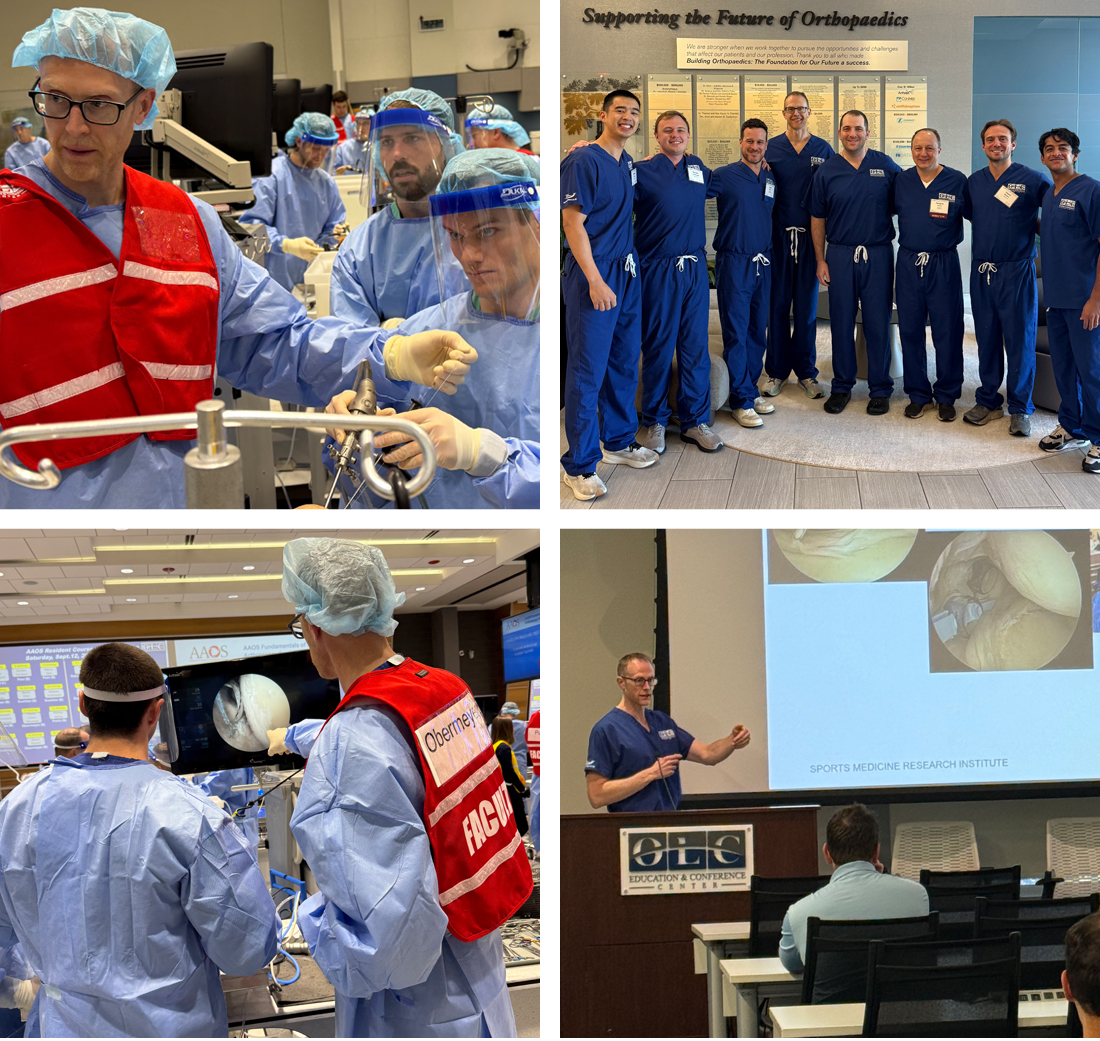
Dr. Obermeyer served as faculty for the American Academy of Orthopedic Surgeons (AAOS) Fundamentals of Knee and Shoulder Arthroscopy course for orthopedic residents at the Orthopedic Learning Center in Rosemont, Illinois. The experience brought together surgeons and physicians in training to build the skills and judgment needed to care for patients with knee and shoulder injuries.

A board-certified orthopedic surgeon specializing in shoulder surgery, knee surgery, and sports medicine in the northwest Chicago suburbs, Dr. Obermeyer also had the opportunity to reconnect with trainees from Loyola University Medical Center, where he completed his orthopedic surgery residency. He subsequently pursued fellowship training in shoulder surgery and sports medicine at Mount Sinai Medical Center in New York. Working with current Loyola residents provided a meaningful connection between his own training and the next generation of orthopedic surgeons.

Teaching arthroscopy connects technical precision with decisions patients can understand. Arthroscopic surgery uses a small camera and specialized instruments to evaluate and treat problems inside a joint through small incisions. For patients, the important questions include whether surgery is appropriate, what tissue can be repaired, and what recovery will require.
In knee arthroscopy and meniscus tear treatment, one fundamental principle is preserving functional meniscus tissue whenever appropriate. The meniscus helps distribute weight and protect the knee’s cartilage. Deciding between meniscus repair and trimming an irreparable portion requires attention to the tear’s pattern, location, blood supply, and the condition of the surrounding joint. A repair may require a longer period of protection during recovery, but preserving this tissue can offer important benefits for long-term knee health. Patients benefit from understanding why two people with a “torn meniscus” may need different treatments and rehabilitation plans.

In shoulder arthroscopy and rotator cuff repair, an equally important principle is restoring the tendon’s attachment to bone while respecting its capacity to heal. Tear size and tissue quality influence the surgical approach. Small incisions do not eliminate the time needed for healing beneath the skin: a repaired tendon still requires protection, followed by a carefully staged progression of motion and strengthening. This helps explain why physical therapy and adherence to activity restrictions are integral parts of rotator cuff surgery recovery.

These principles make surgical education directly relevant to current patients. Learning to perform a procedure also means developing the judgment to recommend it appropriately, discuss nonsurgical options, and explain realistic expectations. For someone seeking care for shoulder pain, a meniscus injury, or a sports-related knee problem, those conversations help connect a diagnosis to everyday goals—sleeping comfortably, climbing stairs, returning to work, or getting back to a favorite activity.

The residents’ enthusiasm and increasingly thoughtful questions were the highlights of the weekend for Dr. Obermeyer. He expressed appreciation to the AAOS and course director Doug Evans for the opportunity to participate.

By sharing experience and connecting with physicians still developing their skills, Dr. Obermeyer is contributing to an ongoing tradition of mentorship in orthopedic surgery. The value of that teaching extends beyond the learning center to the patients these young surgeons will care for throughout their careers.


Book an Appointment